-
Partner / executive management consultant with Nolan, Norton & Co, and
-
Director of the Nolan Norton Institute
-
Professor of organization and change (internal governance) at the Amsterdam Business School of the Universiteit van Amsterdam
New book, published July 18, 2012:
Organization Design for the 21st Century: From Structure follows Strategy to Process follows Proposition, 230 pages, figures and ppt-presentations.
This book explains the development of new organization forms for firms, as these result from innovations in business models, the declining costs of information and communication and the changing nature of the firm. The book relates these new forms to existing publications on organization design, and discusses the limitation of traditional approaches. This book takes a multidisciplinary approach by including the changes in the institutional environment in organization design, the design of the resource allocation process, the design of the budget system and the design of the objective function into the equation of organization design. Also the book takes a new perspective to organization design by using the concepts of human capital, information capital and organization capital. The book describes what psychological factor play a role in organization design, as well the changing nature of organization culture. The book explains the different types of information to be included in organization design and by doing so offers solutions for issues like empowerment, across unit cooperation, exploitation of synergies, creating an environment for creative knowledge workers and how to organize effective process management. The book demonstrates why Chandler's rule structure follows strategy is being replaced by processes follow the (customer value) proposition. The book concludes with an organization design reconciliating exploitation and exploration.
Available at the iBookstore of Apple (including a free preview with content overview, and full first chapter).
Verschenen (16-1-2012):
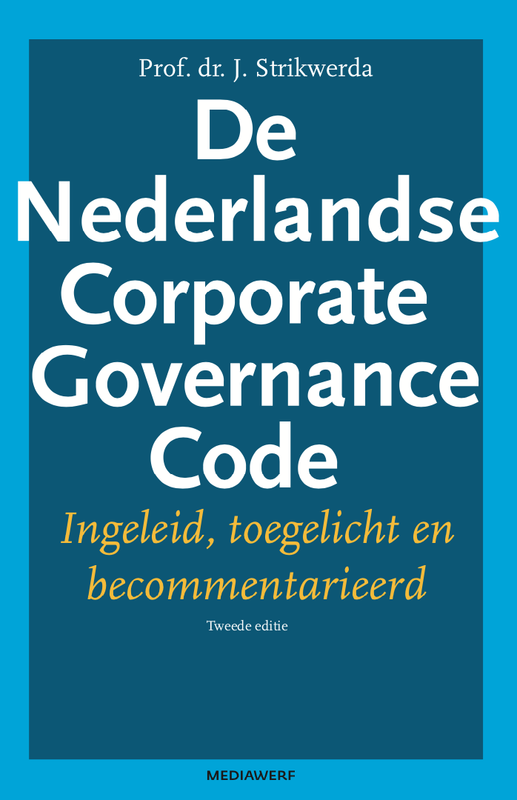
Strikwerda, J. (2012) De Nederlandse Corporate Governance Code: Ingeleid, Toegelicht en Becommentarieerd Van Gorcum, Assen. 236p. Bestellen
Voor een samenvattend artikel van het boek: Strikwerda-commentaar NCGC.pdf Zie ook: Inspirerende evaluatiemodellen in de Nederlandse bestuurskamers, in: RNCINews, Acerta Brussel.
Most recent paper (december 2011): Competing on information, downloadable from http://ssrn.com/abstract=1973575.
Is MVO niet een pleonasme?
Het FD heeft mijn ingezonden brief hierover in de rubriek Optiek (5-1-2012) wat al te drastisch ingekort, hierbij de volledige tekst:
Tijdens mijn studie bedrijfskunde in de jaren zeventig in Delft, bestudeerden we o.m. het boek van Kuin, Management is meer, de sociale verantwoordelijkheid van de onderneming (1977). In mijn latere praktijk ben ik er steeds weer in bevestigd dat ondernemen altijd maatschappelijk verantwoord dient te zijn, welke producten en diensten hoe op de markt worden gebracht, zorg voor het fysieke en sociale milieu en een zo goed mogelijk gebruik maken van het meeste belangrijke productiemiddel in onze samenleving: het menselijke kapitaal. Vandaar dat voor mij MVO net zo iets is als een ronde cirkel. De deelnemers aan het Programma voor Commissarissen en Toezichthouders van de Erasmus Universiteit (FD 27-12-2011), waarin ik zelf docent strategie ben, maken dan ook een kapitale fout door in meerderheid te stellen dat "MVO-resultaten" de beloning van de bestuurder zouden mogen beinvloeden. Morele verplichtingen zijn niet uitruilbaar met nutsmaximalisatie, zo leert ons de econoom Etzioni. Wijze bestuurders zullen niet alleen de maximalisatie van de bijdrage van hun onderneming aan de maatschappelijke welvaart nastreven, maar ook naar zelfbevestiging streven door hun morele verplichtingen jegens de samenleving na te komen. Het geldelijke belonen van MVO is zowel amoreel als immoreel. Bestuurders die zich amoreel en of immoreel gedragen weten zich zwaarder gestraft door publieke reputatieschade dan door een financiele straf.
My third latest book (Dutch)
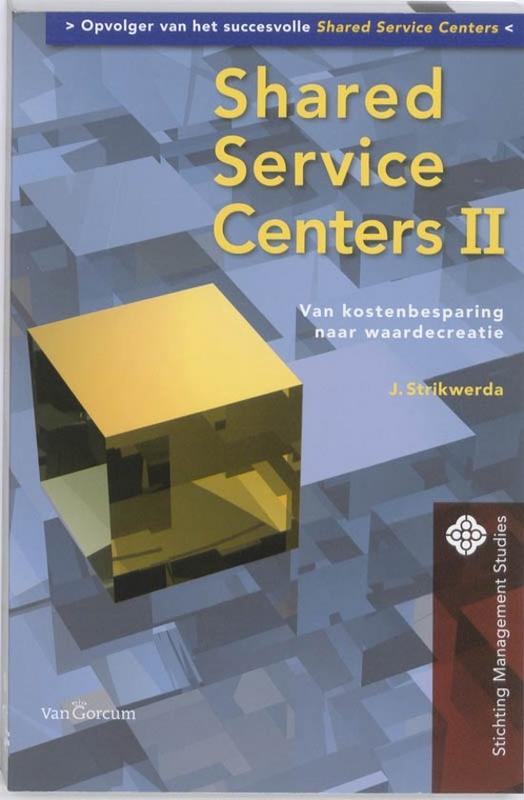
Shared Service Centers II - the expanded and completely updated new edition, including updates of the cases and new cases. Published by Van Gorcum - Stichting Management Studies, Assen -Den Haag, 2010. (click for more information).
My fourth latest book (Dutch)
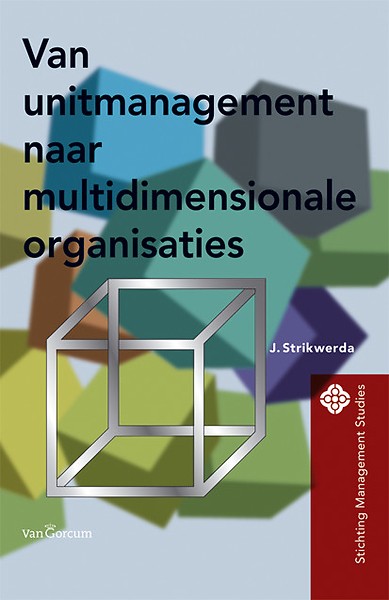
Van unitmanagement naar multidimensionale organisaties (van Gorcum - Stichting Management Studies, Assen - Den Haag, 2008). An provisionary English summary paper, The Emergence of the Multidimensional Organization, can be found at: http://ssrn.com/paper=1077363, Executive Summary (English) and short summary presentation. For further enquiries, please e-mail me: hans.strikwerda@nolannorton.com. Boek bestellen
My fields of expertise
Business Administration for the 21st Century
Today the theory-in-use of many firms and executives still is the dogma of business administration as coined in the first quarter of the twentieth century, by the great organizers such as Fayol, Dupont, Barnard and Sloan. This dogma no longer applies in the informational economy of the 12st century. But in this era we lack the entrepreneurial great organizers to codify a new business administration.
Internal governance: Corporate strategy, grand strategy, assessment of environmental developments, developing new economic models, new business models, implementation of strategic change, post-merger execution.
Organization (re)design and changes processes at governance level and the level of business models, management processes, accountability, allocating decision rights, coordination mechanisms (self-coordiation, imposed coordination)
Corporate strategy. The field of corporate strategy / strategic management is in need to redefine itself. What we used to label strategy appears to be from a perspective of corporate finance and active shareholders simply tactics and economizing. Usefull, but today corporate strategy is about grand strategy, about power play in the market. So I have moved into that field
Management consultancy as a profession: issues, institutional changes, intellectual challenges, the contribution of the profession to the development of society (member of the OOA, certified management consultant).
My methods of engagement (see www.nolannorton.com):
- Consultancy
- Workshops/seminars
- (key note) speaker
- In-house courses
- (multi-)client studies
- Reviews/analysis/monitoring of design processes, change processes, decision making, implementation
Courses I teach
In the international MBA of the Universiteit van Amsterdam:
- The Executive Process (based on the CCMO-course at Harvard Business School) see course syllabus
In the post-doctoral course for controllers (EMFC):
- Internal Governance (organization design, resource allocation, how to organize for uncertainty, management of change, the role of culture, styles of leadership)
- New developments in the economy and society as relevant for CFO's and controllers
In the post-doctoral course for internal auditors (EMIA):
- Internal Governance (see EMFC, here with an emphasis on behavioral aspects and how to audit the system of internal governance and what goes with it)